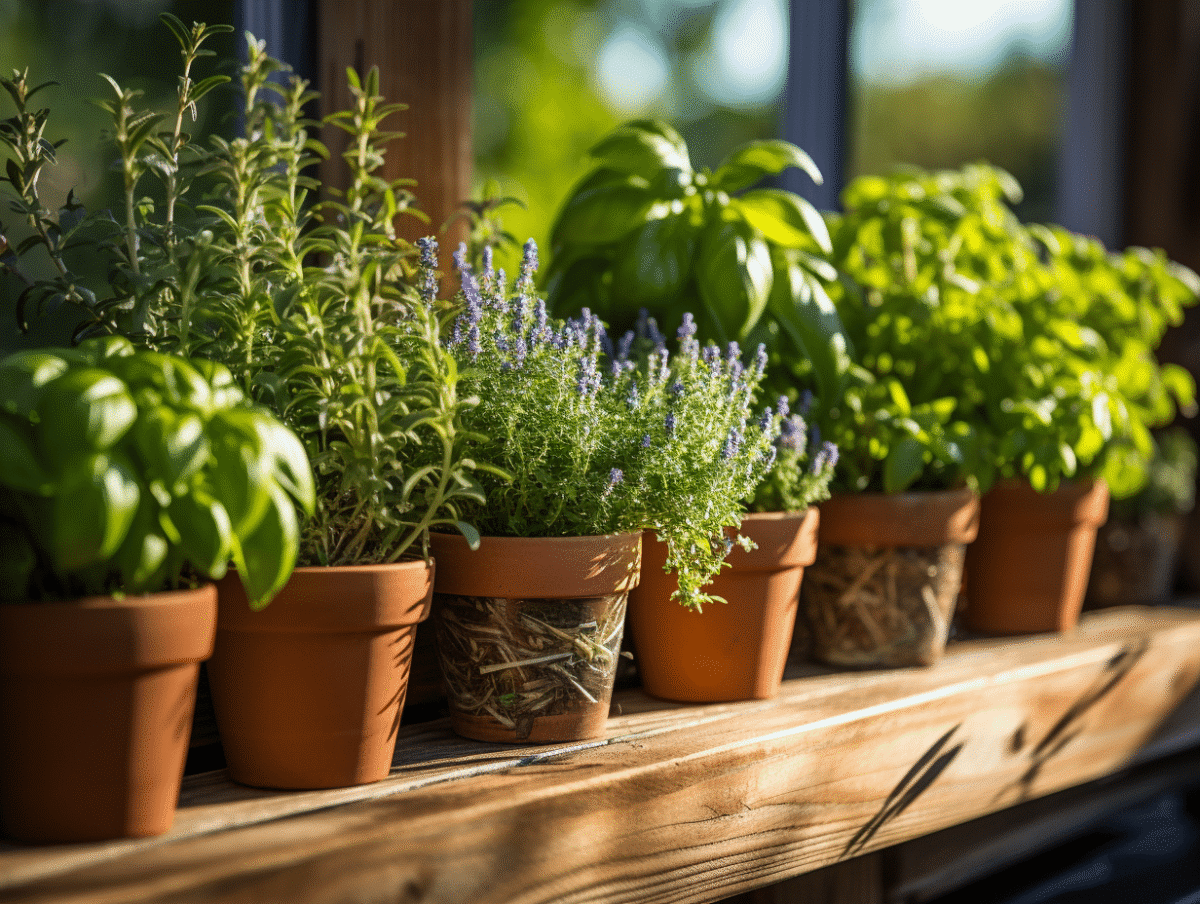
Aromatic herbs are valuable allies for anyone looking to enhance the flavor of their dishes while cultivating their own garden, even in a small space. Whether on a windowsill, an urban balcony, or a small kitchen corner, growing these plants is within everyone’s reach. With suitable containers, a bit of potting soil, and regular watering, it is possible to grow basil, mint, chives, and many others. In addition to adding a touch of greenery, these plants offer the advantage of being both decorative and functional.
Optimizing Space for an Aromatic Herb Garden
In the quest for an aromatic garden in a limited setting, creativity is key. Verticality is a path to explore: hang pots, use shelves or wall supports to multiply growing surfaces without encroaching on living space. Here, Planète Garden becomes a key concept, embodying the harmony between aesthetics and functionality. Aromatic plants, which thrive particularly well in pots on balconies or terraces, fit into this dynamic. For a coherent arrangement, using decorative pots helps harmonize these plants with the interior decor.
The raised garden bed presents another clever solution. By defining a thematic space, it allows for the organized and accessible cultivation of a variety of herbs. This method, in addition to visually structuring the garden, facilitates the management of different species and their growth. The proximity of a barbecue to the herb garden, for example, offers easy access to fresh leaves to enhance grilled dishes and salads.
Designing an herb garden also involves considering the interaction with the surrounding wildlife. Aromatic plants attract butterflies and pollinating insects, contributing to urban biodiversity. The selection of species should take into account their compatibility with local conditions: sunlight, heat, and well-drained soil are essential, avoiding harmful overwatering. Perennial aromatic herbs such as chives, common sage, mint, thyme, and lemon verbena adapt particularly well to the longevity of a garden over time.
Techniques and Tips for Successful Herb Cultivation in Small Spaces
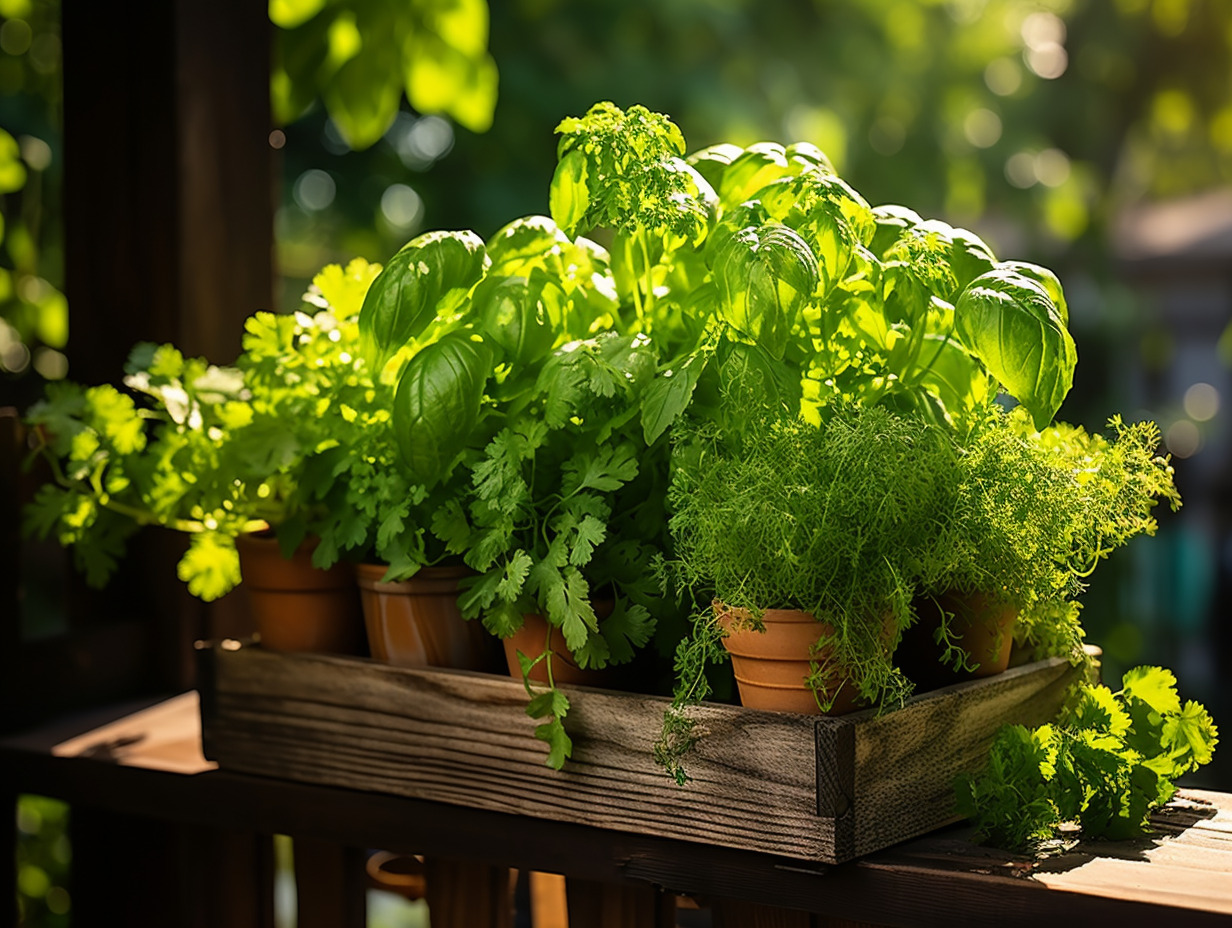
Growing aromatic herbs in a limited space requires planning. It is important to select varieties suited for container or pot life, which can thrive with partial or full sunlight. Aromatic plants such as basil, dill, parsley, and cilantro, classified as annuals, require seasonal renewal. Their shorter life cycle invites crop rotation and regular reseeding. It is worth noting that the ideal planting season is in spring or early autumn, to avoid severe frosts and dry periods.
For perennial plants like chives, common sage, mint, thyme, rosemary, and lemon verbena, a permanent installation is feasible. These species, which are more resilient to climatic variations, provide a continuous source of fresh or dried herbs to enhance dishes and desserts or to make herbal teas.
The success of this cultivation also depends on the ability to manage environmental conditions. A well-drained substrate is crucial to prevent root asphyxiation and overwatering, the enemies of aromatic herbs. Sunny exposure is favorable, while ensuring that the most delicate plants are protected from the harshest afternoon rays.
The appeal of biodiversity should be considered. Aromatic plants do not just enhance the kitchen; they play an ecological role by attracting butterflies and pollinating insects. In doing so, they contribute to the health of the urban ecosystem, creating a dialogue between nature and culture, between the useful and the pleasant.