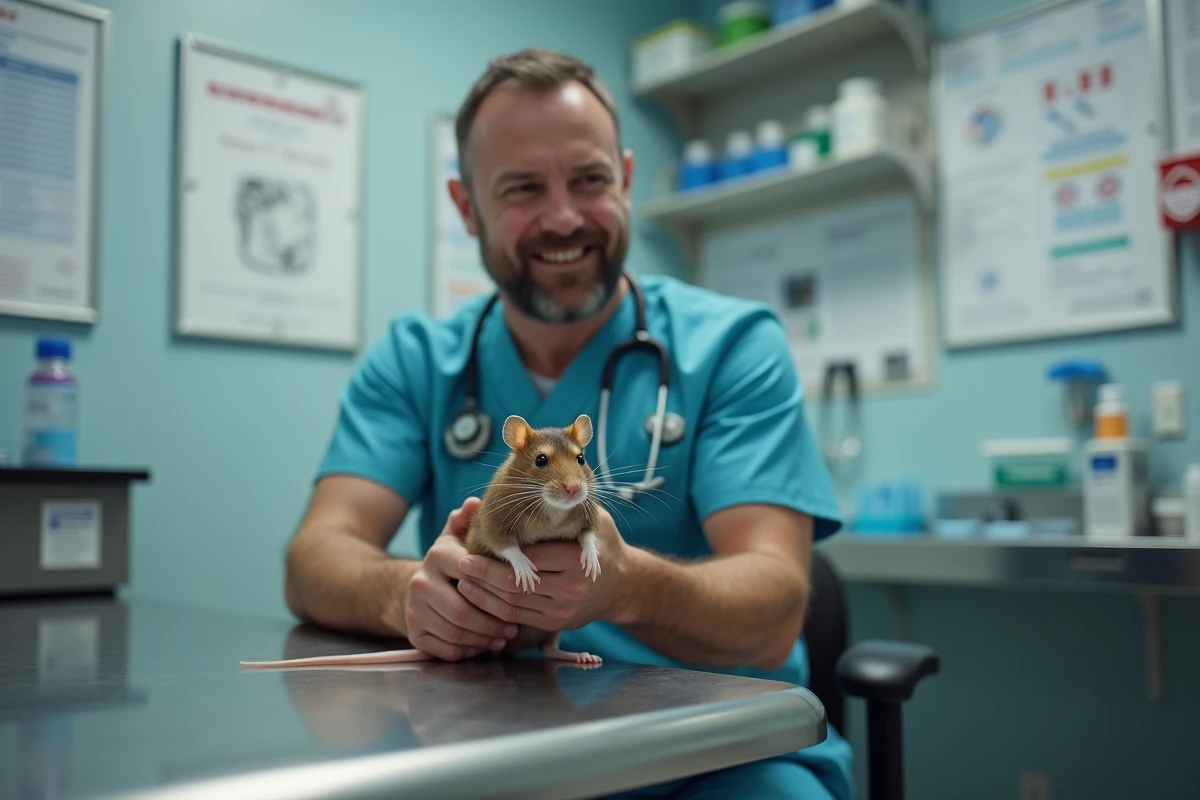
Hemophilia does not stop at the human species. For decades, biomedical research has relied on specific strains of laboratory rats that carry this rare disease. Yet, the idea that all rats would share this coagulation disorder persists, blurring reality and fueling unwarranted concerns.
Among breeders and adopters, false certainties creep in everywhere. Between hasty diagnoses and unjustified alarms, the ground is mined. However, solutions exist, designed for the daily lives of these special animals, provided they are known and applied with discernment.
What We Really Know About Hemophilia in Rats
In rats, hemophilia is observed only in certain laboratory strains developed to mimic factor VIII deficiency, akin to human hemophilia A. For these animals, hemostasis becomes precarious: the slightest cut, the smallest bump, anything can worsen quickly. This is precisely why these rats are selected as models in coagulation and gene therapy research.
The genetic makeup of the hemophilic rat does not discriminate between male and female. Outside the scientific framework, this disorder remains exceptional in pet animals. Its signs are unmistakable: prolonged bleeding, spontaneous bruising, painful joints caused by small, invisible bleeds. Injections of clotting factors are the only option, but over time, some develop antibodies that complicate management. Researchers proceed with caution, aware of the fragile balance between scientific experimentation and respect for living beings.
For those who wish to inform themselves without falling into approximations, hemophilic rats and reality dissects false beliefs and separates serious information from noise. The article dismantles confusions, relying on current data to dispel persistent rumors.
Hemophilic Rats: Misconceptions and Scientific Truths
Over time, myths have settled around rats and their supposed fragility. The confusion between the wild rat, reputed to carry ills, and the strictly selected laboratory rat muddles general perception. It is necessary to set the record straight and not succumb to confusion.
Erroneous statements abound. Among them: believing that all rats are hemophilic or that they are responsible for the plague. Yet, Yersinia pestis, the bacteria responsible, is unrelated to hemophilia. Laboratory subpopulations live with this pathology solely for research purposes, not among all rats.
The famous rat tail also lends itself to hasty judgments. Many imagine it harbors germs, whereas it simply regulates its temperature. As for the reputation of rats as violent, it does not rest on reality. Their behavior is primarily explained by the environment and socialization, well before any hypothetical genetic law.
| Misconception | Scientific Truth |
|---|---|
| All rats are hemophilic | The disease only affects certain strains used in laboratories |
| The rat’s tail is “disgusting” and carries diseases | It is dedicated to thermoregulation and is not involved in hemophilia |
| Rats transmit the plague today | The plague is no longer circulating in rat populations in France today |
The facts are clear: a domestic rat with a genetic disease poses no danger to humans alongside it. There are clear, proven veterinary protocols, far from outdated fears and dusty clichés.

How to Better Support a Rat with Hemophilia in Daily Life?
Caring for a hemophilic rat requires attention at every moment. A small scratch, an innocuous incident is enough to trigger complications. The key is anticipation: from the moment the cage is set up, prioritize soft materials, eliminate any sharp edges, and monitor the arrangements. Every detail counts.
Medications designed for humans are not suitable for small rodents. There are few truly adapted veterinary solutions. This is why prevention reigns supreme: handle this rat gently, think about the layout to minimize the risk of injuries, monitor interactions to avoid tensions or fights.
Here are some concrete recommendations to integrate into daily life:
- Never house with predators such as ferrets, weasels, or cats; caution knows no exceptions.
- Choose a soft, non-irritating bedding to gently protect the skin and paws of the fragile animal.
- A vigilant follow-up of the general condition is essential: any unusual fatigue, paleness, or stiffness should raise alarms and prompt a quick veterinary consultation.
On the nutrition side, focusing on a varied and balanced diet helps strengthen its resilience. At the slightest sign of concern, muscle pain, or abnormal bleeding, consulting an experienced veterinarian is imperative, without delay.
Last point of vigilance: if the environment needs to be treated to limit rodents, ban chemical anticoagulants. Prefer mechanical methods or gentle repellents to ensure the safety of the hemophilic rat and the entire household.
This little rodent requires particular vigilance, but it is neither inaccessible nor mysterious. Informed management offers a true quality of life, paving the way for trust. And tomorrow, when research bears fruit, these model rats will bring new hopes, real and tangible.