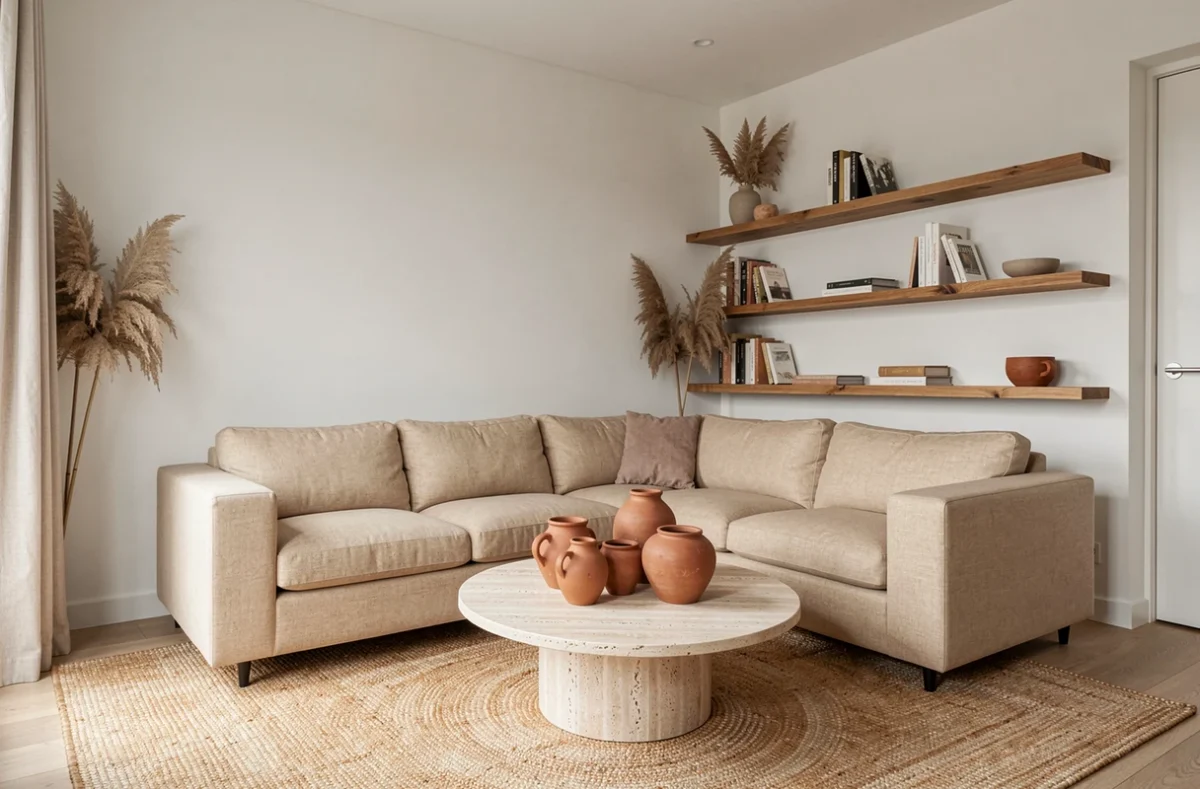
A second-hand corduroy sofa, a coffee table with removable legs to fit through a narrow staircase, a wall repainted in terracotta after three years of complete white: long-lasting decor choices often stem from a concrete constraint. Current decor trends reflect this pragmatism, where the material, color, and shape of furniture respond as much to daily use as to a desire for atmosphere.
Removable furniture and reuse: the decor trend changing supply
When moving or rearranging a living room, the first question is not the color of the cushion but the logistics. A piece of furniture that cannot be disassembled or moved without a truck becomes a hindrance, regardless of its style.
The 2025-2030 sector reference framework from Ameublement français highlights repairability and disassembly from the design stage. In practice, this leads to pieces whose elements can be separated, replaced, or rearranged. An armchair with a detachable seat from its base, a modular shelf that can be reconfigured according to the room: this disassembly criterion weighs as heavily in a decor project as the choice of wood or color.
On the second-hand side, the sector is also organizing. Ecomaison applies a zero eco-contribution for certain eligible second-hand furniture, with an associated deduction on the invoice. This same observation can be found in decor articles on News Déco: the reuse of furniture goes beyond simple vintage aesthetics to become a structured supply mode, driven by the extended producer responsibility in France.
Earthy color palettes and warm accents for a vibrant interior
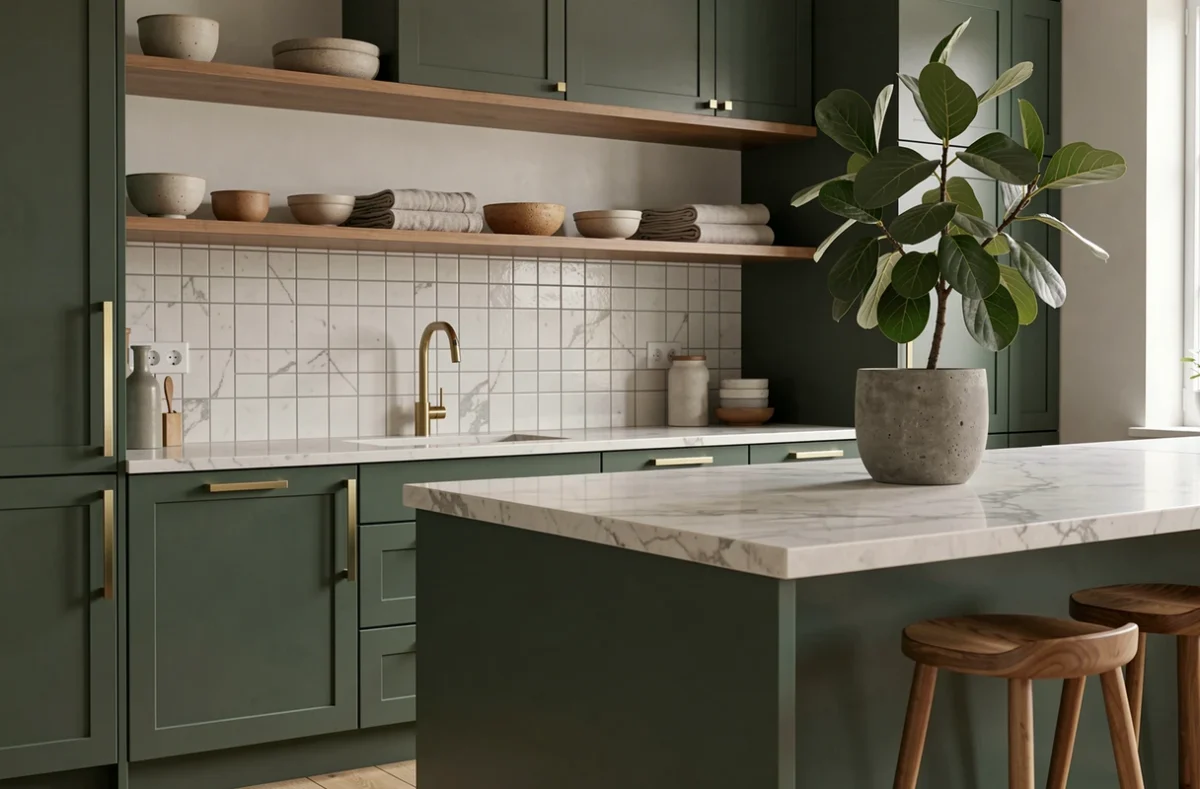
Omnipresent white is receding. We see it in recent interior design projects: clay, golden sand, and terracotta shades are settling on walls and furniture. These colors not only serve the ambiance, but they also better absorb the low light of a north-facing living room and mask signs of use on raw wood furniture.
Natural tones warm up a space without adding extra textiles. An ochre wall behind a beige linen sofa creates a depth that white does not provide, even with carefully arranged lighting. One gains atmosphere without multiplying accessories.
Bright accents, not dominant
Some trends lean towards terracotta red or deep blues, but in targeted touches: a vase, a cushion, the edge of a shelf. The classic mistake is to paint an entire wall in a bright color that one can hardly tolerate after six months. An accent touch can be replaced in an hour, while repainting a wall takes a weekend.
- A cushion or throw in a bright tone (terracotta, duck blue) is enough to energize a living room with neutral walls and can be easily changed with the seasons.
- An amber glass light fixture provides warm light without altering the wall palette, while playing on the trend of translucent materials.
- A small accent piece (stool, side table) in a bold shade serves as a mobile focal point that can be moved from room to room.
Raw materials and bio-sourced materials: which choices last over time
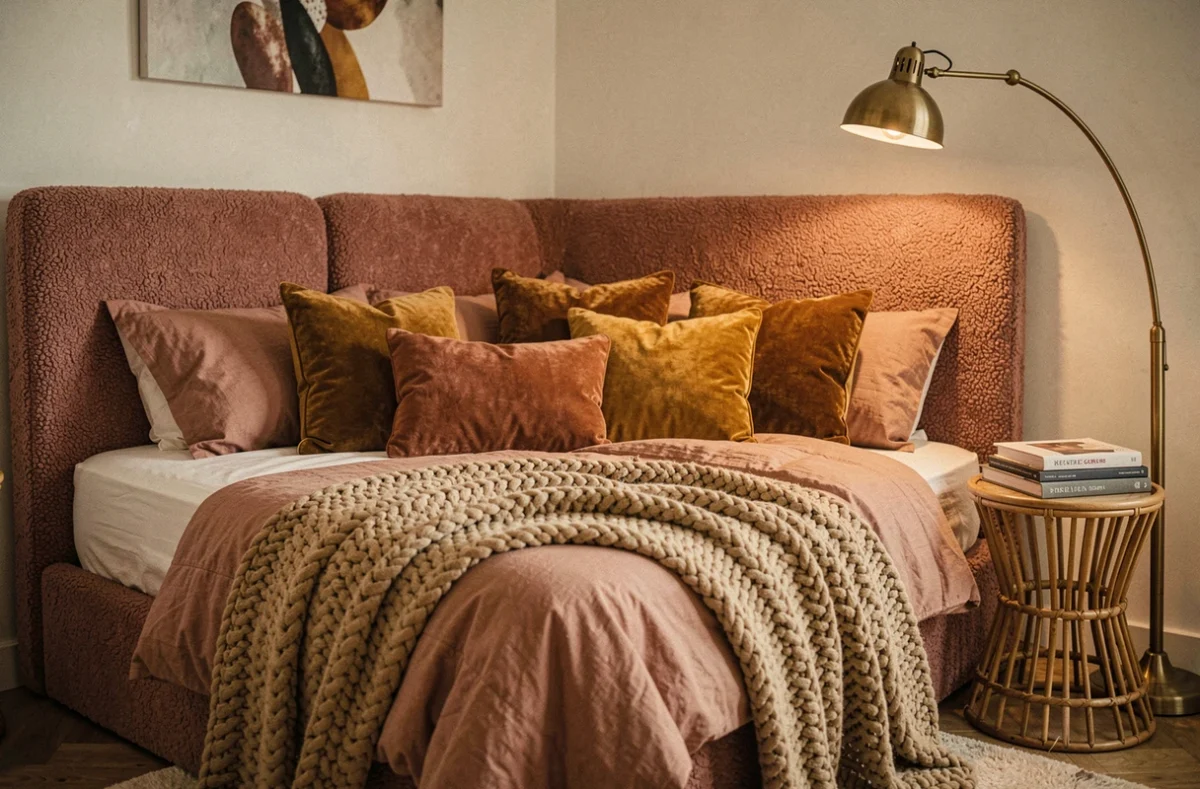
Raw wood remains the flagship material in interior decoration, but its use is evolving. It is found unvarnished, lightly oiled, with a visible grain. Solid oak or recycled pine ages well as long as they are not exposed to direct moisture, which excludes certain poorly ventilated bathrooms.
Bio-sourced materials are gaining ground in new furniture. Linen, hemp, cork: these fibers appear on seating, decorative panels, and wall coverings. Their durability varies depending on the surface treatment, and untreated linen on a family sofa seat wears out faster than coated linen. The choice depends on the level of use in the room.
Porcelain stoneware and natural stone for floors and backsplashes
Porcelain stoneware now mimics natural stone with a fidelity that complicates visual distinction. For a kitchen floor or a backsplash, porcelain stoneware offers stain resistance that natural stone lacks without treatment.
On the other hand, real stone retains a touch and irregularity that tiles do not quite reproduce. The compromise is often made piece by piece: porcelain stoneware in high-traffic areas, natural stone in less exposed spaces.
Biophilic design and curved shapes: adapting the trend to your space
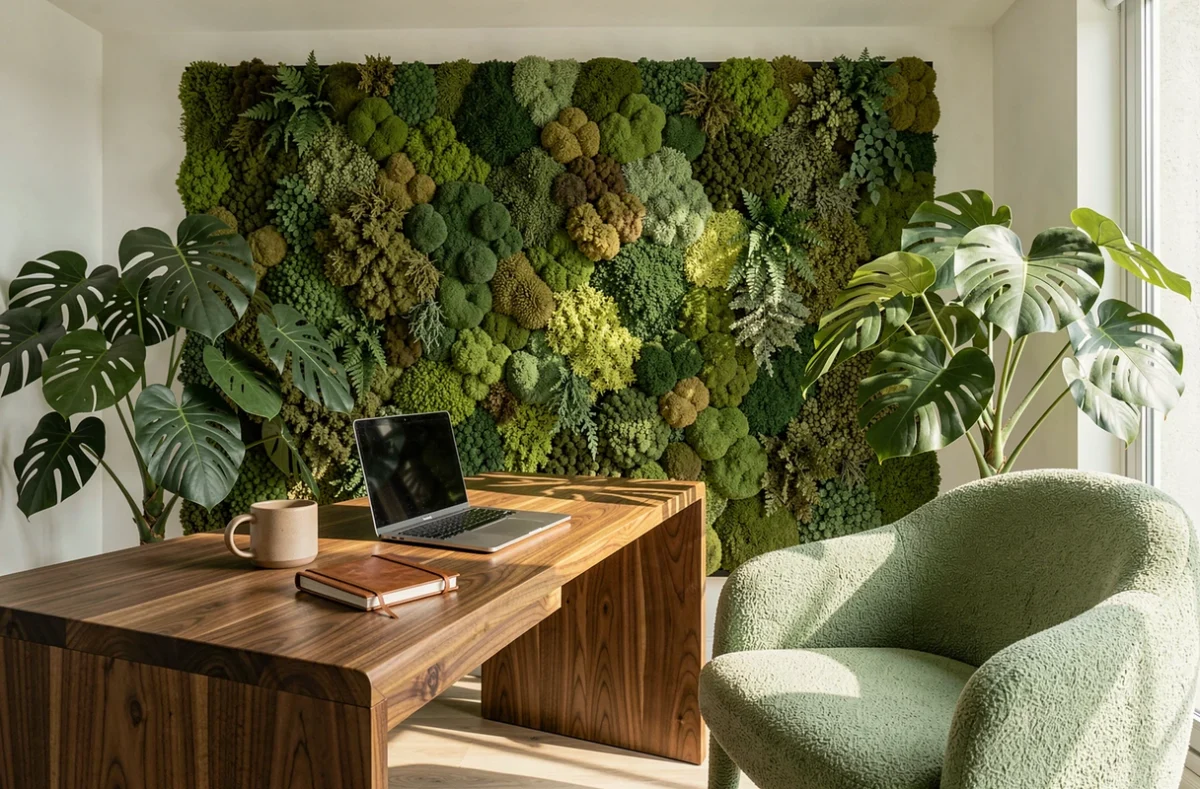
Biophilic design, which incorporates plant elements and natural materials into the layout, works well in a large, bright living room. In a thirty-square-meter studio, a green wall or a hanging planter can quickly become cluttered. The idea is adapted to the available space: a climbing plant on a high shelf, a terracotta pot placed on the floor near a window.
Curved lines on furniture soften the angular volumes of an old apartment. A sofa with rounded arms, an oval table instead of a rectangular one: these fluid shapes change the flow in the room. It is best to avoid multiplying curved furniture in a small space, at the risk of losing useful centimeters along the walls.
- A large round mirror on a narrow wall creates an illusion of depth while following the trend of organic shapes.
- Textiles with plant patterns (foliage, veins) bring the biophilic dimension without maintenance or watering.
- A natural fiber rug (jute, sisal) delineates a lounge area in an open space and reinforces the coherence of raw materials.
Long-lasting decor trends are those that are adapted to one’s constraints of space, budget, and use, not those that are reproduced exactly from a catalog. A removable piece of furniture that can be reconfigured, an earthy color used in touches rather than a total look, a bio-sourced material chosen according to the room: it is in these concrete trade-offs that interior decoration finds its meaning.