A roller shutter that no longer closes all the way in the middle of winter, a smoke detector that beeps for no reason at three in the morning, a lock whose cylinder spins freely: we often discover how reliable our equipment is at the worst possible moment. Choosing equipment for home comfort and security starts with anticipating situations where failure is not an option.
Smoke and carbon monoxide detectors: two risks, two devices
Smoke detectors and carbon monoxide detectors are often confused. The first responds to visible combustion particles. The second detects an invisible, odorless gas produced by faulty fuel-burning appliances (boilers, stoves, water heaters). According to the Provence-Alpes-Côte d’Azur Regional Health Agency, a CO detector does not replace appliance maintenance or proper ventilation: it provides a warning, but prevention remains the first line of defense.
For smoke detectors, reliability is about more than product compliance. A compliant device that is poorly positioned or whose battery is never checked offers no protection. The usual recommendation is to install one in the hallway leading to the bedrooms, and to have one on each floor in a multi-level home.
When browsing Mister House’s equipment range, you’ll find products covering everything from detection to thermal comfort, making it easy to shop across brands that provide ongoing support.
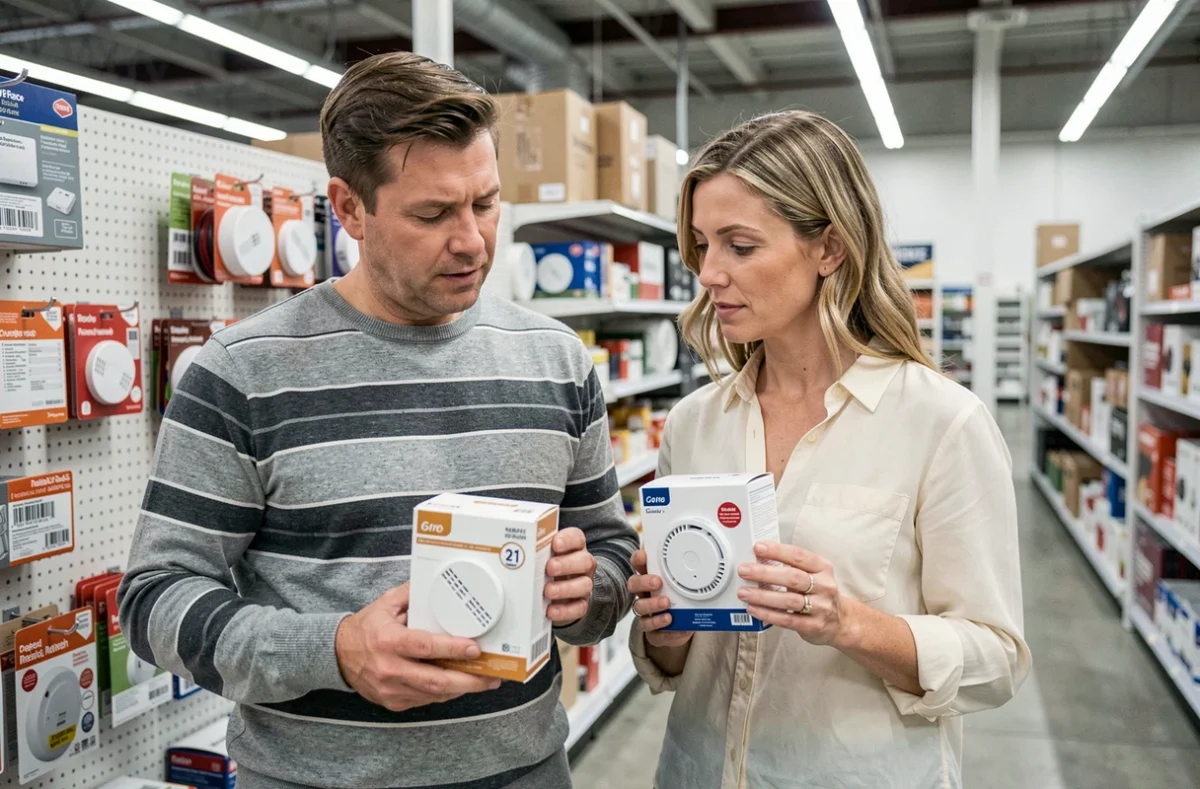
Practical criteria to consider before buying a detector
- Check that the CE marking is printed on the device itself, not just on the packaging.
- Choose a model with a long-life built-in battery (sealed lithium battery) to avoid forgetting to replace it.
- Test the control button every month and replace the device as soon as it fails the test, even if it appears to be working.
Heating controls: what the regulations actually require
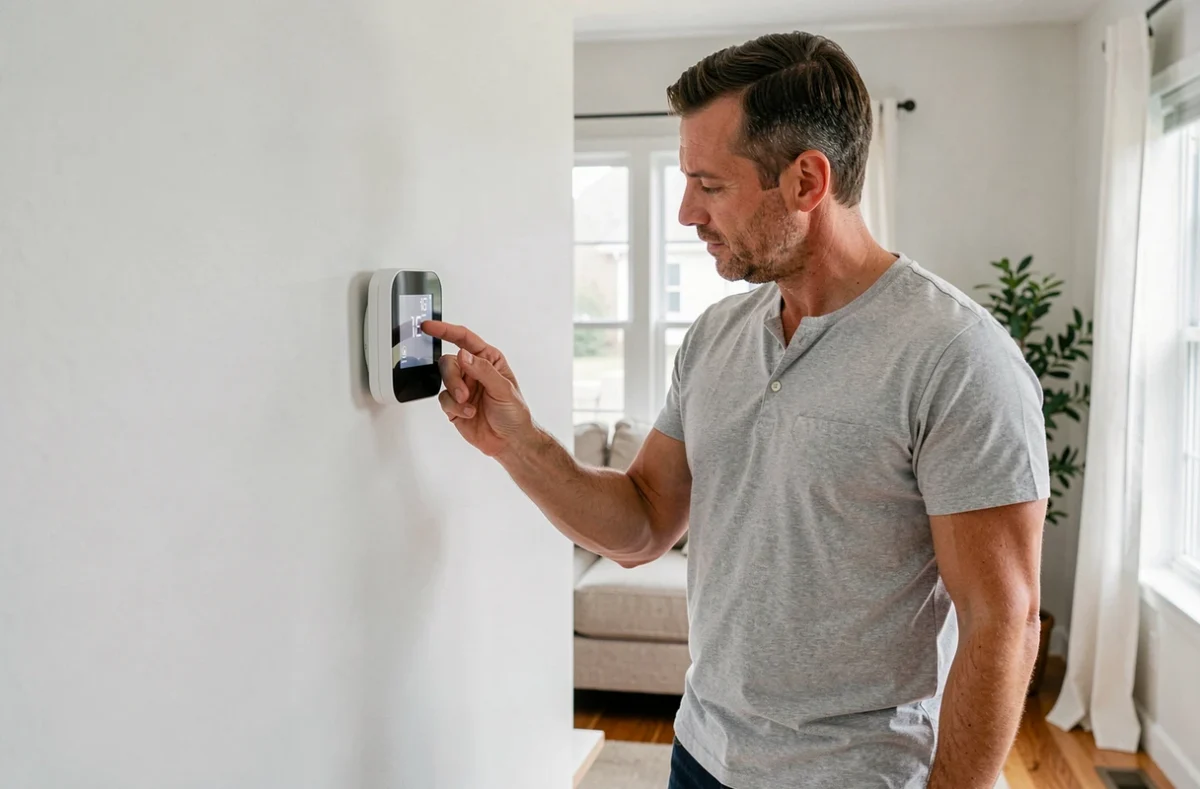
It’s often said that you need a smart thermostat to comply with regulations. The rules on room-by-room heating control concern the programming of multiple temperature settings. They do not, in themselves, require a smart thermostat. A standard timer with scheduled settings may be enough to meet the regulatory requirement.
This distinction matters when choosing equipment. A smart thermostat lets you control heating remotely and monitor energy use, but it relies on your home Wi-Fi and an app that the manufacturer may discontinue. A wired timer, on the other hand, can operate independently for years.
Smart thermostat or wired timer: which to choose
For a home occupied continuously with regular schedules, a wired timer meets the need without extra cost. For a second home or a short-term rental, remote control makes a smart thermostat worthwhile, since you can adjust the heating before you arrive.
The long-term reliability of a smart thermostat depends on whether the manufacturer continues to maintain its servers and release updates. Before buying, check how long the brand has offered the model and whether the app still receives regular updates.
Locks and alarms: balancing deterrence and detection
Competitors go into great detail about alarm components (control panel, siren, door and window sensors). In practice, the first question is simpler: should you reinforce the door first or install an alarm?
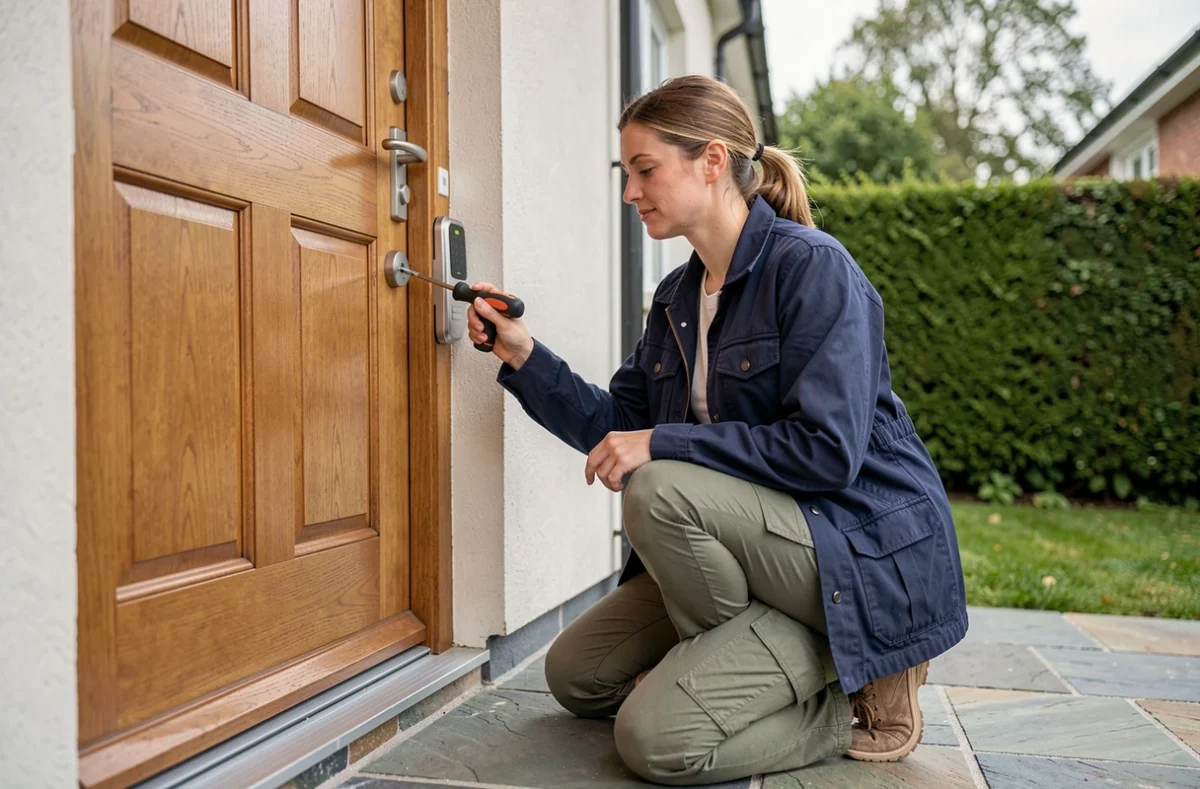
An alarm in a home where the front door can be forced open in seconds with a crowbar does little to protect you. A multipoint lock is the foundation, well before any electronic security layer. It physically slows down an attempted break-in, whereas a standard single-cylinder lock can give way in seconds.
An alarm then serves as an additional layer of protection. For a system built to last, choose brands that provide ongoing support (Somfy, Diagral, Delta Dore, Bosch, among others). A system bought from a manufacturer that goes out of business quickly loses any prospect of updates or compatible replacement sensors.
Security cameras: resolution isn’t everything
A high-resolution camera with a narrow field of view leaves blind spots. Field of view and night-vision quality matter just as much as image resolution. An outdoor camera must also withstand the elements, so check its water and dust resistance rating before buying.
Image storage also deserves consideration. Cloud-only storage requires a monthly subscription and a stable internet connection. Local storage on an SD card offers independence, but the camera could be stolen along with its recordings. Combining both is the most robust solution.
Outdoor lighting and motion detection: an underrated investment
Well-positioned motion-activated lighting is more of a deterrent than you might think. A light that suddenly switches on draws the neighbors’ attention and removes the darkness an intruder needs.
For reliable performance, the infrared sensor should cover actual approach routes (gate, front door, side access points), not just the main façade. A poorly aimed sensor causes false alarms (a passing cat, a moving branch) and eventually gets disconnected.
- Position the sensor perpendicular to the direction of travel, not facing the street, where passing cars will keep triggering the light.
- Set the timer to a short duration (one to two minutes) to avoid wasting energy and getting the neighbors used to constant lighting.
- Choose a light fixture that resists water splashes and opt for a cool color temperature for better visibility at night.
Choosing reliable home equipment isn’t about piling on technology. You can improve security and comfort by starting with the basics (a sturdy lock, well-positioned detectors, correctly aimed outdoor lighting) before adding connected features. A simple device that works every day is better than a sophisticated system that no one maintains.