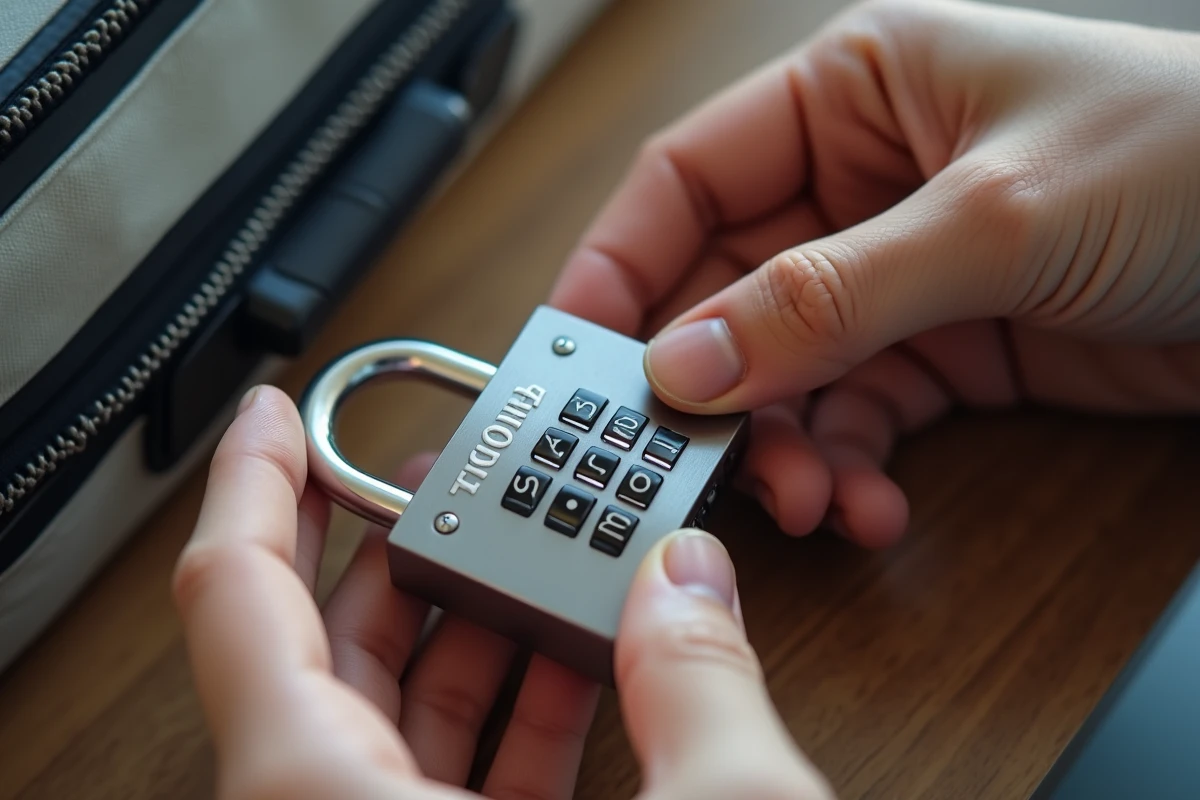
The TSA 007 lock operates with a three-digit combination and a reset mechanism that varies by model. Changing this combination takes less than a minute, provided that a specific order is followed. An error in the sequence is enough to record a code different from the intended one, which explains the majority of lockouts reported by users.
Reset Mechanism of the TSA 007 Lock: Two Variants to Identify
Before any manipulation, the first instinct is to determine which reset system your lock is equipped with. Not all TSA 007 locks are reprogrammed in the same way.
The most common variant uses a reset button or pin, located on the side or back of the casing. It is pressed with the tip of a pen to enter programming mode. The second variant relies on the rotation of the shackle (the metal loop): once the lock is opened with the current code, the shackle rotates 90 or 180 degrees to activate the change mode.
On some recent models, the reset button has been removed. These so-called “fixed code” locks do not allow for changing the combination without destructive intervention. Checking for the presence of this pin before purchasing a TSA 007 lock avoids an unpleasant surprise. The procedure to change the code of a TSA 007 lock directly depends on this material distinction.

Step-by-Step Procedure to Change the TSA 007 Combination
This sequence applies to models equipped with a reset button or a rotating shackle. The default factory code is usually 0-0-0.
- Open the lock with the current combination, then locate the reset button (or turn the shackle 90 degrees depending on the model)
- Press the reset button with a pen until you feel a click, or hold the shackle in the turned position
- Turn each dial to set the new three-digit code, ensuring that each digit is perfectly aligned with the central marker
- Release the reset button or return the shackle to the normal position to validate the new code
- Test immediately by locking the lock and then entering the new combination to confirm it works
The critical step is the third one. If you release the button or shackle before finishing positioning the three dials, the lock records a partial code that you do not know. This scenario represents, according to feedback from specialized locksmiths, the most frequent cause of locks reported as “out of service.”
Check the Alignment of the Digits from Several Angles
Manufacturers like Samsonite and Delsey recommend checking the positioning of the dials by looking at the lock head-on, then slightly from the side. A half-click misalignment, invisible to the naked eye, is enough to shift the actual code by one digit.
A good test is to turn each dial one click up and then bring it back to the desired number. If the dial “catches” or resists, it is probably not well-centered.
Common Errors That Block a TSA 007 Lock
Three situations cause the majority of lockouts, and none are due to a defect in the lock.
Releasing the shackle or button too early remains the main trap. Programming mode deactivates as soon as the pressure stops. If you have only set two dials out of three, the third digit recorded will be the one displayed at the moment of release, not the one you intended to set.
Changing the code too often accelerates internal mechanical wear. The dials eventually no longer return perfectly to face, creating a desynchronization between the displayed digit and the recorded digit. The instructions from several major brands highlight this risk and suggest limiting combination changes to the strict necessary.
The third error is attempting a reset on a fixed code lock. Forcing the shackle or inserting an object into an opening not intended for reprogramming risks breaking the internal mechanism without results.
Reliable Methods to Remember Your TSA Code
Choosing an easy-to-remember code does not mean choosing a code that is easy to guess. Combinations like 1-2-3, 0-0-0, or a full birth year are the first tested by a thief.
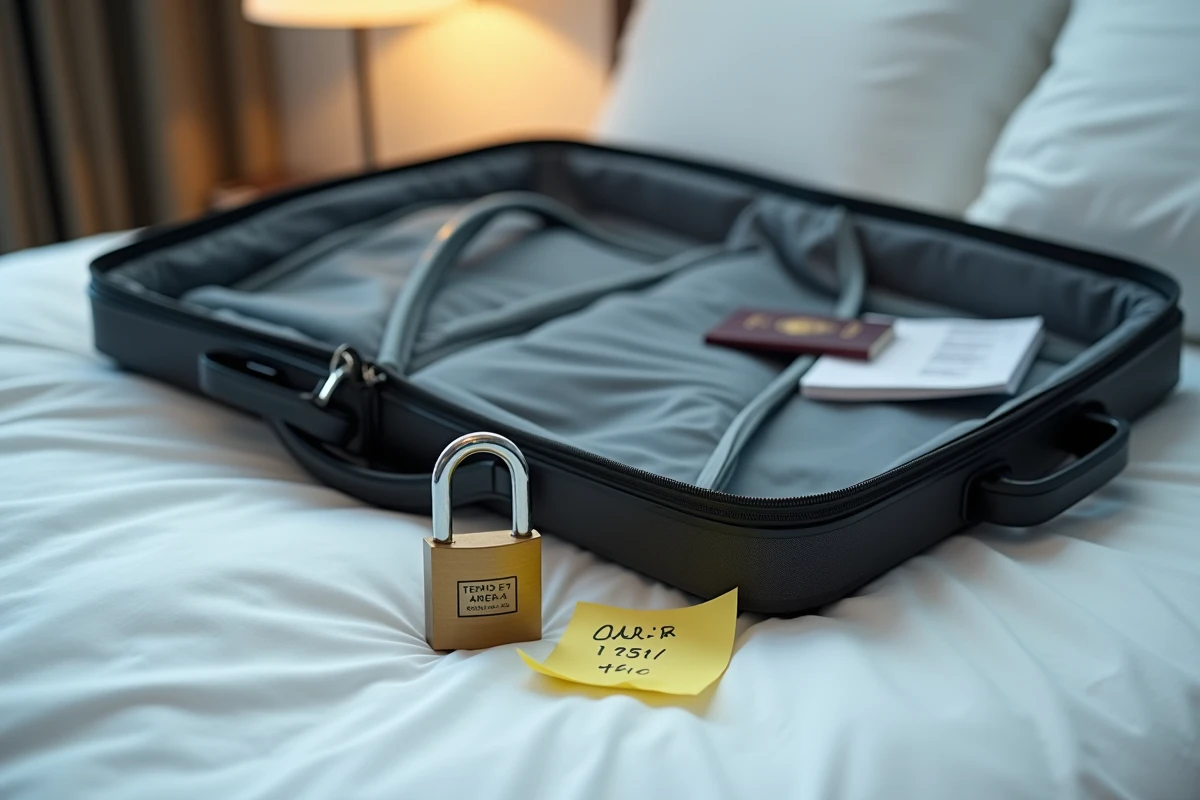
The method most recommended by specialized travel blogs is to store the code in a password manager (1Password, Bitwarden, or equivalent). The code is accessible from a phone even offline, and it is less likely to be lost compared to a piece of paper slipped into a pocket.
- Note the code in the password manager app under a dedicated entry (“Luggage Lock”)
- Associate the code with a personal marker that cannot be guessed: the last three digits of an old phone number, a childhood street number
- Take a photo of the lock with the correct code displayed, stored in a locked album on the phone
Writing the code on a piece of paper stored in the suitcase itself is the worst option. In case of lost luggage, the code goes with the suitcase.
A Final Reflex Before Every Trip
Testing the lock the day before departure, after checking the code in the manager, takes ten seconds. A lock tested the day before never jams at the airport. Lockouts almost always occur when the traveler has not touched the lock for several months and no longer remembers if they changed the combination during the last trip.