
A sofa that is too wide blocks the passage to the kitchen, a wall repainted in sage green clashes with the floor tiles, and a hastily mounted shelf warps after three weeks. Arranging and decorating your home often starts with these kinds of missteps, not with inspiration found on social media. Starting from the actual constraints of each room, rather than a mood board, avoids most costly mistakes.
Visual fatigue and overload: the decor mistakes that weigh down an interior
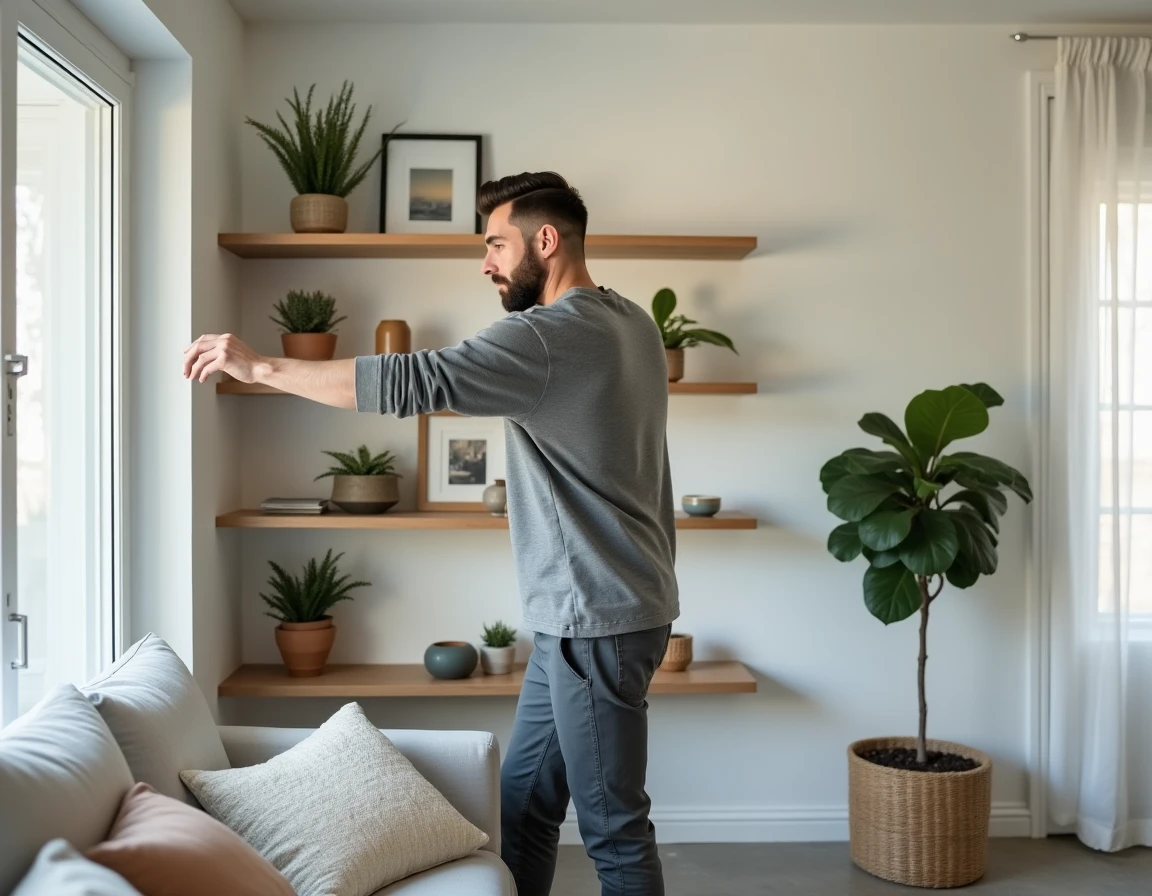
There is much talk about trends, but rarely about what poor decoration does to daily life. Recent content from SeLoger and habitat psychologists highlights a concrete issue: visual overload in a room generates mental fatigue. Too many bright colors in a living room, patterns competing for attention on cushions, rugs, and curtains simultaneously, and a constant mess due to a lack of pre-planned storage.
The recommendation is clear for rest areas like the bedroom: limit aggressive contrasts, favor muted tones, and reduce the number of exposed objects. This is not a question of minimalist taste; it’s a matter of neurological comfort.
You can find practical ideas and feedback on the home page of Brico Déco Jardin, especially for identifying the rooms where the layout needs to be reconsidered first.
Specifically, before choosing a color or a piece of furniture, you save time by asking a single question for each space: does this room need to be restful or stimulating? The answer guides everything else, from colors to lighting.
Living room and kitchen layout: starting with circulation
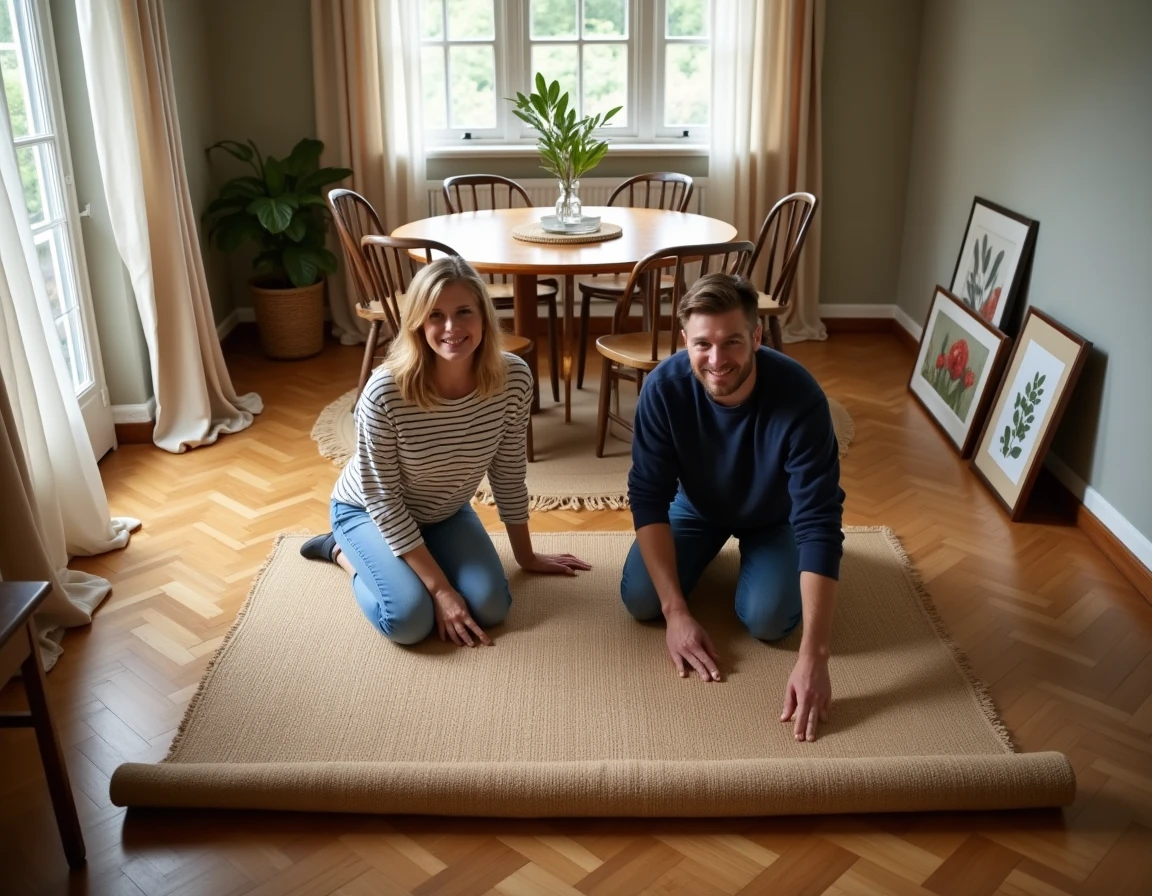
The classic reflex is to choose a sofa and then arrange the living room around it. The problem is that the circulation between living areas determines comfort far more than the furniture. If you have to go around a coffee table to reach the patio door, the space will feel cramped even in a large room.
Mapping the flows before furnishing
You can use tape on the floor to outline the natural paths between the entrance, kitchen, and sofa. The main passage should remain clear with a width of at least one outstretched arm. This test takes ten minutes and prevents ordering a piece of furniture with the wrong dimensions.
For an open kitchen, the activity triangle between the sink, stove, and refrigerator remains the most reliable layout reference. If any of the three elements forces you to cross the living room’s passage area, the plan needs to be revised.
Natural light and furniture arrangement
Placing the sofa with its back to the window seems logical for watching television, but it cuts off the light distribution in the rest of the room. A perpendicular arrangement to the source of natural light opens up the visual field and reduces the need for artificial lighting during the day. Feedback varies on this point depending on the orientation of the facade, but the principle holds true in most configurations.
Wall decoration and colors: test before committing
Repainting an entire wall based on a three-centimeter cardboard sample is a risky bet. The color changes radically depending on the room’s light, the time of day, and adjacent surfaces.
Applying a paint sample on a square of at least 50 cm on each side, directly on the concerned wall, and observing it for two or three days, morning and evening, is the safest method. This may seem like a banal piece of advice, but most returns to paint stores concern precisely this issue.
Augmented reality applications speed up this process. IKEA with its IKEA Kreativ tool, Leroy Merlin, and Castorama now offer the ability to visualize furniture and colors directly in your home via a smartphone. The colorimetric reliability is not perfect, but it allows you to eliminate clashing options before pulling out your credit card.
- Test the color on the brightest wall and the darkest wall in the room to see the actual difference
- Limit strong shades to one or two walls maximum per space to avoid visual saturation
- Pair a colored wall with furniture and textiles in neutral tones to balance the overall look
- Check the color under artificial lighting in the evening, as warm or cool LEDs alter perception
Upcycling and second-hand: decorating without a huge budget
Sustainable decor is no longer a niche discussion. DIY and furniture brands have made it a full-fledged commercial focus in recent years, with dedicated sections for recovering and repurposing objects.
On the ground, the most cost-effective actions remain simple:
- Sanding and repainting a solid wood piece costs a fraction of the price of an equivalent new piece, and the result often lasts longer
- Replacing the handles on a sideboard or dresser changes the look of the furniture for just a few euros
- Changing textiles (curtains, cushion covers, throws) transforms the ambiance of a room without touching the walls or floor
A common trap of amateur upcycling is confusing patina with neglect. A refurbished piece with unsuitable paint (without primer on melamine, for example) will chip within months. The choice of primer is as crucial as the finishing color.
Storage by room: the constraint that structures all decor
A well-decorated interior without sufficient storage visually deteriorates in a few weeks. Planning storage before decoration, not after, is the sequence that works.
In the entrance, a closed low cabinet absorbs shoes and bags without cluttering the visual field. In the bathroom, wall shelves above the door exploit a dead space that almost no one uses. In the bedroom, a bed with a storage base frees up the equivalent of a whole dresser.
Visible storage (open shelves, baskets, hooks) works as long as the number of exposed objects is limited. Beyond five or six items per shelf, the decorative effect shifts to clutter. It’s better to rotate displayed items by season than to show everything all the time.
Every room has its exploitable blind spot. Identifying it before buying any decorative furniture is what separates a sustainable layout from an interior that gets reorganized every six months.